Surprising New Drone Job: How Indoor Inventory Swarms Are Quietly Transforming Warehouses
Drones are usually associated with dramatic landscape shots, cinematic real estate videos, or crop monitoring, but one of the most surprising new uses emerging from recent technology is fully autonomous indoor inventory drones and drone swarms in warehouses and factories.
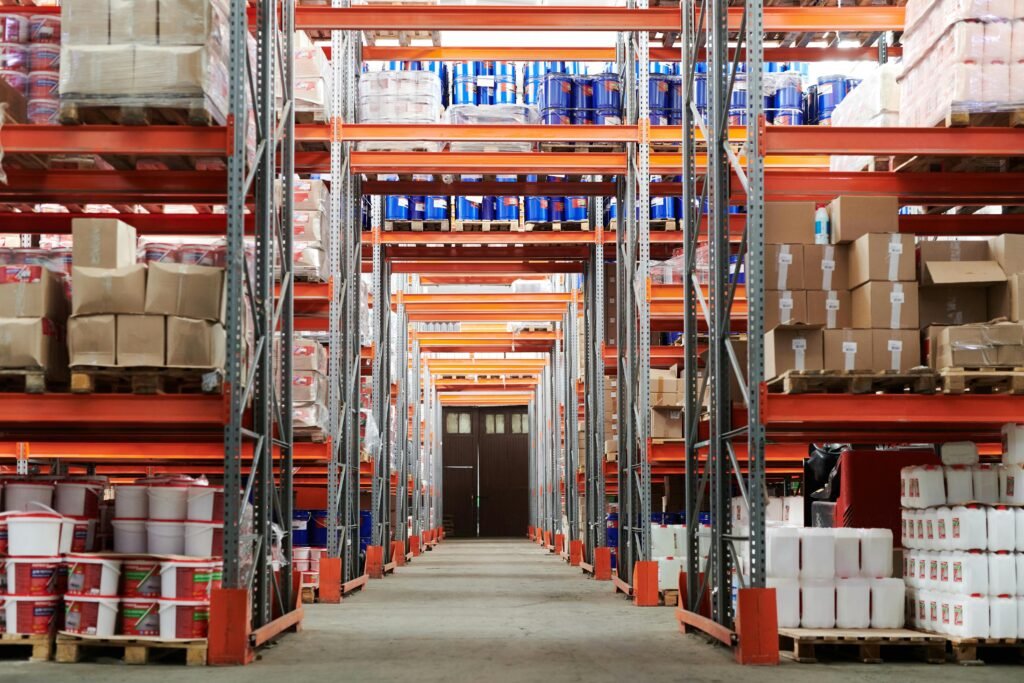
Instead of flying outdoors with GPS, these small, sensor‑rich drones are now navigating narrow aisles, scanning barcodes and RFID tags, talking directly to warehouse management systems, and turning stock‑taking into a continuous, automated process that barely needs human intervention.
From “flying camera” to autonomous warehouse worker
Traditional drones are built for open skies, relying heavily on GPS, a human pilot, and line of sight to stay stable and safe.
Modern indoor inventory drones flip this model by using:
- Onboard AI and computer vision to recognize shelves, pallets, markers, and obstacles instead of relying on satellite positioning.
- Obstacle avoidance sensors and SLAM‑style navigation to build a map of the warehouse and move safely through tight spaces and high racks.
- Autonomous mission planning, so they can follow pre‑defined flight paths overnight without a pilot, scanning every aisle and bay.
Companies such as Flytware and ZenaTech are already deploying or testing systems where fleets of compact drones move through warehouses to track stock, read labels, and update inventory in real time.
What this new use actually replaces
Inventory control in large warehouses, logistics hubs, and manufacturing plants has historically been slow, labor‑intensive, and error‑prone.
Indoor inventory drones are designed to replace or dramatically reduce reliance on:
- Manual stock counts – Workers with clipboards or handheld scanners walk aisles, climb ladders, and scan each shelf, a task that can take days and usually has to happen during downtime.
- Forklifts and lifts just to “go look” – Accessing upper rack levels often means moving equipment around and temporarily blocking aisles, which slows other operations and introduces safety risks.
- Periodic, static snapshots of inventory – Traditional stock‑takes are done monthly or quarterly, so discrepancies can persist for weeks before being detected; drones enable far more frequent or even continuous checks.
Indoor drone systems do not necessarily eliminate human workers, but they automate the repetitive, time‑consuming parts of stock‑taking and free staff for exception handling and higher‑value tasks.
How indoor inventory drones actually work
The surprising part is that these drones function in environments where GPS is either weak or nonexistent: deep inside buildings filled with metal racks, machinery, and radio noise.
To cope with this, new technology stacks combine several elements:
- Vision‑based navigation and mapping – Using onboard cameras and depth sensors, drones build an internal map of aisles and racks, detect obstacles, and localize themselves in 3D space, similar to how some autonomous robots and vehicles operate.
- Barcode, QR, and RFID scanning in flight – High‑resolution cameras and specialized readers capture shelf labels, pallet barcodes, and RFID tags from a distance as the drone flies past, often at multiple rack levels.
- Integration with Warehouse Management Systems (WMS) – Data collected by drones—item IDs, locations, counts—is streamed to backend systems, updating inventory quantities and positions in near real time.
- Swarm coordination – In more advanced setups, multiple drones (a swarm) share information and coordinate paths so they can cover large facilities faster without colliding or duplicating work.
The result is a kind of “flying robot workforce” that can be scheduled to run at night or during quiet periods, delivering a fresh inventory snapshot by the time human staff return.
Why swarms are the next leap
The truly new and surprising twist is not just one drone doing this work, but swarms: coordinated fleets of small indoor UAVs that share tasks and adapt in real time.
With swarm technology:
- Coverage scales linearly – If one drone can scan a warehouse in eight hours, a coordinated swarm of eight drones can, in principle, cover the same area in about one hour.
- Tasks can be specialized – Some drones can focus on barcodes, others on RFID, and others on visual anomaly detection (missing pallets, damaged packaging, blocked aisles).
- Resilience increases – If one unit fails or needs charging, others can dynamically adjust routes to complete coverage, which is crucial for 24/7 operations.
Recent announcements describe projects using miniature “nano” drones indoors, with bespoke cameras and AI models tuned to recognize labels and security threats while coordinating through shared data links.
Benefits over traditional technology and methods
From a business and operations perspective, indoor inventory drones offer several advantages that legacy tools struggle to match.
1. Speed and frequency
Automated flights can scan thousands of locations per hour, making it possible to:
- Move from quarterly or monthly inventory counts to daily or continuous verification.
- Detect discrepancies and misplaced items within hours instead of weeks, reducing the scale and cost of errors.
- For large distribution centers or e‑commerce hubs, this shift from static to near‑real‑time inventory visibility can be transformative.
2. Accuracy and data richness
Human fatigue, distractions, and rushed counts all contribute to errors in manual stock‑taking.
Drones improve on this by:
- Capturing consistent, timestamped images and reads that can be audited later if needed.
- Linking each item or pallet to a precise location and history of previous scans, feeding into analytics and predictive systems
This level of data supports better forecasting, replenishment planning, and root‑cause analysis when something goes missing.
3. Safety and ergonomics
Climbing ladders, operating lifts in tight aisles, and working at height all carry risk, especially under time pressure.
Indoor drones improve safety by:
- Taking over the high‑rack scanning tasks that require workers to go up and down repeatedly.
- Reducing the need for forklifts or cherry pickers solely for visual inspections or barcode checks.
Over time, fewer incidents and lower physical strain can translate into lower insurance costs and a healthier workforce.
4. Continuous connection to the digital warehouse
Because they integrate directly with Warehouse Management Systems and other analytics tools, inventory drones become part of a broader “smart warehouse” ecosystem.
This enables:
- Live dashboards showing current stock and potential issues, fed directly by drone scans.
- Connections to robotic picking systems, automated storage, and digital twins, where the physical warehouse is mirrored in software in close to real time.
This integration turns inventory from a static record into a dynamic, data‑driven process.
Challenges and limitations of this surprising use
Despite its promise, warehouse and indoor swarm deployments come with non‑trivial challenges.
- Navigation complexity – Indoor environments with moving forklifts, workers, and ever‑changing pallet layouts demand extremely robust obstacle avoidance and dynamic path planning.
- Regulatory and safety considerations – Although indoor flight is often outside typical national airspace rules, companies still need clear internal safety procedures, fail‑safes, and risk assessments.
- Battery life and charging logistics – Small drones must manage limited flight times; automated charging docks or battery swap systems are required to make continuous operations practical.
- Change management on the ground – Staff need to trust the data and understand how drones fit into their work; otherwise, automation can be resisted rather than embraced.
Nonetheless, as AI, vision systems, and swarm coordination improve, many analysts expect this kind of indoor, data‑centric drone work to expand rapidly over the next few years.
Why this use case matters for the future of drones
Indoor inventory swarms show how far drones have moved beyond simple “eyes in the sky” into fully integrated, autonomous actors inside digital operations.
Several broader trends converge in this surprising application:
- AI and edge computing allow drones to make real‑time decisions on board, not just stream video for humans to interpret.
- Swarm frameworks demonstrate how multiple autonomous agents can coordinate to solve problems faster and more robustly than a single device.
- The tight integration with enterprise systems shows drones evolving from standalone tools into nodes inside larger cyber‑physical systems, alongside robots, sensors, and software platforms.
As these capabilities mature, other surprising drone uses become more realistic: from autonomous inspection of complex industrial plants to fully automated, drone‑enabled micro‑fulfilment centers that operate with minimal human presence.
For now, indoor inventory drones and swarms already offer a compelling glimpse of what happens when new technology gives drones the ability not only to see the world, but also to understand, record, and update it continuously from the inside.